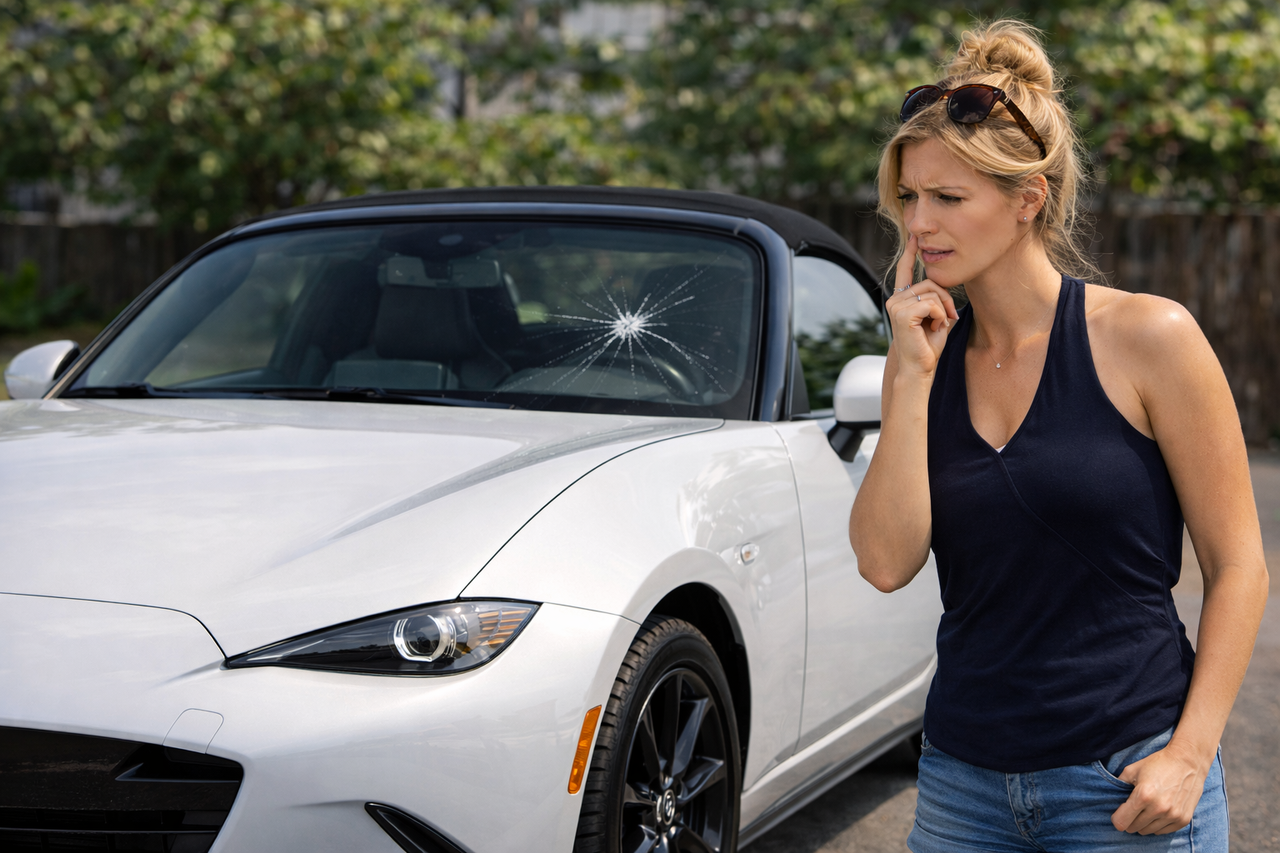
Windshields aren’t just panes of glass. They’re structural, electronic, and increasingly tied into how your car sees the road. If you drive around the 27406 area, you’ve probably seen more ADAS sensors packed into windshields than cup holders. When a rock finds your line of sight on I-85 or a sudden temperature swing spiderwebs a crack, you face a deceptively simple question: OEM or aftermarket? The choice affects safety, noise, clarity, sensor calibration, resale value, and your wallet.
insurance covered windshield replacement GreensboroI’ve spent years in bays from 27401 to 27410, swapping glass on everything from base-trim sedans to radar-stacked SUVs. The pattern is clear: not all glass is equal, and not every driver needs the same solution. Let’s unpack the real trade-offs so you can choose smartly, whether you call an Auto Glass Shop near 27406 or chase an auto glass quote 27406 online.
What “OEM” and “Aftermarket” Actually Mean
OEM glass is produced by the original equipment manufacturer, either by the automaker or contracted glass companies working to the automaker’s spec. Think Saint-Gobain Sekurit, Pilkington, AGC, or Fuyao with the car maker’s brand and DOT codes. OEM windshields match the original curvature, thickness, frit pattern, tint band, acoustic layers, head-up display wedge, and camera brackets. They also come with the exact logo your car had when it rolled off the line.
Aftermarket glass is manufactured by third-party companies without the automaker’s branding. Quality ranges widely. Some aftermarket glass is produced in the very same factories with nearly identical specs, minus the automaker logo. Other batches are looser on tolerances, especially with curvature and embedded features.
In the 27406 market and neighboring zip codes like 27401, 27405, and 27407, both choices are readily available. If you call for a 27406 Windshield Replacement, you’ll hear both options, often with a meaningful gap in price.
Why Windshield Choice Affects Safety
A windshield is part of the safety cell. It backs up the A-pillars, helps the passenger-side airbag deploy correctly, and serves as a mounting platform for your forward-facing camera. I’ve seen two installs look identical from the curb, yet behave very differently when we ran calibration and water tests. Small flaws matter.
Glass curvature and thickness affect how the camera sees lane lines. A millimeter off can degrade ADAS performance or push your camera out of calibration. On vehicles with rain sensors, a misaligned bracket or slightly different frit pattern confuses the sensor. On models with head-up display, a missing wedge layer turns crisp speed numbers into a fuzzy double image.
When you hear a shop say “we prefer OEM for this model,” it’s not a sales pitch. Some vehicles tolerate aftermarket glass very well. Others punish even small deviations with failed calibrations, ghosting, or wind noise that drives you to crank the radio at 65 mph on US-421.
The Money Question: Price, Insurance, and Total Cost
Here’s the typical range I see for the Greensboro area:
- Non-ADAS compact sedan, aftermarket: 250 to 450 Non-ADAS compact sedan, OEM: 400 to 700 ADAS-equipped SUV, aftermarket: 450 to 900 plus calibration ADAS-equipped SUV, OEM: 800 to 1,500 plus calibration
Insurers often prefer aftermarket glass if it meets federal safety standards. If you have glass coverage, ask whether OEM is allowed. Some policies approve OEM on vehicles under a certain age or when ADAS is involved. Calibration costs can add 150 to 400 for static or dynamic procedures, sometimes both. That applies whether you choose OEM or aftermarket. If you’re hunting for an auto glass quote 27406 or need pricing in nearby zones like 27401, 27403, 27405, or 27407, ask the shop to separate glass, moldings, labor, and calibration so you see the full picture.
Clarity, Distortion, and Daily Driving
Optical clarity is not just a luxury. It affects eye strain and reaction time. Higher-end OEM glass usually earns its price through tighter distortion control, especially around the edges. On long commutes from 27405 down to 27408, that tiny “bend” in the pattern of power lines or lane markers matters more than you think. Premium aftermarket can be excellent too, but ask for brands with a track record rather than the cheapest option that happened to be in stock.
If you have a head-up display, confirm the glass includes the HUD-compatible laminate. If you drive at night and wear prescription lenses, even mild ghosting can be maddening. I’ve redone replacements for drivers in 27410 and 27409 who tolerated a faint double image for a week, then decided they couldn’t live with it.
ADAS and Calibration: Where Tolerances Turn into Time
Most late-model vehicles use a forward camera that lives behind the rearview mirror. Replace the windshield, and the camera often needs recalibration. Two main methods are used:
- Dynamic calibration uses a scan tool and a driving route. Around Greensboro, we use safe stretches with clear lane lines, typically 10 to 30 minutes depending on traffic. Static calibration uses targets and a leveled bay. It takes more setup time and strict measurements.
OEM glass often calibrates faster because the bracket geometry, frit shading, and curvature mirror the original spec. Good aftermarket glass can calibrate just as well, but I plan extra time to make sure the camera lands inside its acceptable aim box. If an Auto Glass Shop near 27406 tells you calibration is optional, that’s a flag. Many vehicles store a fault code and disable or limit ADAS if the system isn’t calibrated after replacement.
Sound, Heat, and UV: Comfort Features That Hide in Plain Sight
Modern windshields do more than block bugs. Many include acoustic interlayers that dampen road roar and wind hiss. The difference shows up on the highway. I’ve swapped acoustic OEM glass into vehicles that originally had non-acoustic, and the cabin felt like someone closed an extra door.
Heat-reflective coatings matter in our summers. If your original glass had a solar coating and the replacement doesn’t, you’ll notice a hotter dash and weaker AC performance at idle. OEM part numbers specify these options clearly. Aftermarket suppliers usually do too, but you need to ask. If you commute across 27401, 27402, or 27403 during peak sun, you’ll appreciate the right spec.
Fit and Finish: The Stuff You Only Notice When It’s Wrong
Here’s what separates a tidy install from a headache:
- Moldings and clips. Reusing brittle moldings to save money can cause flutter at speed. New OE-style moldings are worth it. Pinchweld prep. Rust or old urethane left behind leads to bonding issues. I’ve seen leaks months later because someone rushed prep. Glass position. A windshield can be “in” yet sit 2 millimeters too high on one side. That creates wind noise and water channel problems. Cure times. Fast-cure urethane can be drive-away safe in as little as 30 minutes, but only at the right temperature and humidity. I’ve turned down same-day release when a cold snap hit 27406 because the safe cure window stretched.
If you’re visiting an Auto Glass Shop near 27401, 27406, or 27410, ask how they handle these details. An extra hour now saves you two return trips later.
Warranty Reality: What to Expect and What’s Marketing
OEM glass usually carries the automaker’s parts warranty, often a year, sometimes longer. Aftermarket warranties vary from “manufacturer defects only” to full lifetime coverage on workmanship and leaks from the shop. Here’s the catch: most warranties exclude rock chips and stress cracks from impact. What you want is a clear workmanship warranty that covers leaks, wind noise caused by installation, and trim issues for as long as you own the vehicle. A reputable 27406 Auto Glass installer will explain where their coverage ends.
When OEM Is Worth It
I recommend OEM in these situations:
- Vehicles with head-up display. You need the proper wedge laminate to avoid ghosting. Models known for tight ADAS tolerances. Some makes, especially luxury brands and certain Subaru, Honda, and Toyota models, calibrate cleaner with OEM. Newer vehicles under lease or warranty. Some lease turn-in inspectors look for the correct logo. It’s not universal, but I’ve seen clients in 27409 and 27408 pay at return for mismatched screens. When you’re sensitive to noise. OEM acoustic layers can be noticeably quieter.
When Aftermarket Makes Sense
Quality aftermarket is a smart choice when:
- Your vehicle doesn’t have ADAS or HUD. Fewer embedded features means fewer pitfalls. You plan to keep the car for a short time or need a value solution after a storm season. For many daily drivers across 27405, 27407, and 27411, a good aftermarket windshield is perfectly safe. The brand is known. Names like Pilkington, AGC, Guardian, and high-grade Fuyao can be excellent, especially when matched with proper calibration.
Price should not be the only factor, but it’s a fair tie-breaker if specs match and the shop’s work is solid.
The Installer Matters More Than the Logo on the Glass
I’ve replaced glass for clients across 27402, 27403, 27404, 27406, and 27407 who initially chased the cheapest quote, then circled back because of leaks or failed calibrations. The installer’s process, equipment, and care trump everything. If you’re comparing an auto glass quote 27401 to an auto glass quote 27406, check the fine print:
- Do they include OEM moldings and clips? Will they perform static or dynamic calibration as required, not just “drive it and see”? What urethane do they use, and what’s the safe drive-away time given today’s conditions? Do they document pre-existing damage, take photos, and clean the pinch weld properly? Are they comfortable handling vehicles with rain sensors and camera brackets without bending tabs or stripping adhesive pads?
A skilled tech can make good aftermarket glass perform beautifully. A sloppy install can make OEM glass whistle and leak.
An Everyday Scenario From 27406
A customer with a 2019 Toyota Camry XSE came in after a stone strike on I-40. The car had lane keep assist, radar cruise, and a head-up display. Insurance steered toward aftermarket. The first replacement from a budget brand produced faint double images in the HUD and failed static calibration twice by a narrow margin. We sourced OEM with HUD laminate and proper bracket geometry, reinstalled, and calibrated dynamically in under 20 minutes. The HUD cleared, the camera landed dead center, and the customer’s out-of-pocket difference ended up at about 220 after insurance. In that case, OEM wasn’t luxury, it was function.
Contrast that with a 2015 Honda Fit from 27403, no ADAS, no rain sensor. Aftermarket from a reputable brand installed with new moldings and a careful urethane bead worked flawlessly, no leaks, no noise, at a price that made sense for a commuter with 160,000 miles.
Glass Codes, Decoding What You’re Really Buying
Look for these markings near the bottom corner:
- DOT number: Specifies the certified manufacturer. AS1: Safety standard for windshields. AS2 and AS3 are for other glass. Logos and part numbers: Automaker logo means OEM. Absence doesn’t mean poor quality, but it tells you what you’re getting.
Save a photo of your old windshield’s logos before replacement. It helps match acoustic, solar, and HUD specs. If you call an Auto Glass Shop near 27406 or around 27401, 27405, or 27410, text that photo to the estimator. You’ll get a more accurate quote and fewer surprises on install day.
Weather, Cure Times, and Mobile Service in the Triad
Mobile replacements are convenient, especially if you’re juggling work in 27411 or classes near 27412. But temperature and humidity drive cure times. On chilly mornings, drive-away safe windows extend. A good tech will use a moisture meter, reference urethane charts, and advise honestly. I carry a portable heat source for trim work when a cold snap hits 27406, yet I won’t rush a car if cure time isn’t there. Safety beats schedule.
Also, choose your parking spot wisely after replacement. Avoid gravel-laden routes for the first day. Don’t slam doors with windows fully up for 24 hours since pressure can push on uncured urethane. Skip the car wash for a day or two. These small habits keep your fresh seal intact.
What Local Shoppers Ask Most
People across the 274xx area codes ask smart questions, and they’re consistent:
- Will aftermarket affect resale? Usually no, unless the buyer is particular about logos on luxury models. Clean installs matter more than the brand on the corner. Will OEM stop rock chips better? Not really. Both meet safety standards. Impact resistance has more to do with luck and debris than branding. Why do I still hear wind noise? Often it’s a molding or alignment issue. Quality aftermarket and OEM both stay quiet when installed right. Why did my sensor stop working after install? Missing gel pad, misaligned bracket, or an unperformed calibration. It’s fixable when the shop owns the process.
If you need price clarity, get a couple of quotes. An auto glass quote 27409 can differ from an auto glass quote 27410 by more than you’d expect because of supplier stock and calibration fees. Just make sure each quote matches your exact features, not a generic windshield.
Edge Cases: Heated Wiper Park, Camera Heaters, and IR Coatings
Certain models hide extras at the edge of the glass: heated wiper park zones, camera heaters, or infrared-reflective coatings invisible to the naked eye. If your defroster suddenly struggles or the wipers chatter after a replacement, odds are the spec was wrong or connectors weren’t seated. Tell your shop every feature your car has. If you’re scheduling in 27406, send your VIN. We decode features from the build sheet, then cross-check the windshield part number so you get the right options the first time.
How I’d Choose for Common 274xx Vehicles
- Basic sedan with no ADAS, high mileage. Choose a reputable aftermarket windshield, new moldings, and let the tech take their time. Save the money for tires and brakes. Mid-trim SUV with lane departure, no HUD. Ask for a known aftermarket brand with precise brackets. Plan for calibration. If the quote gap to OEM is small, consider OEM for easier calibration and peace of mind. Luxury vehicle with HUD and acoustic glass. OEM is the safer bet. Your ears, your HUD, and your ADAS will thank you. Work truck with frequent gravel travel. Aftermarket, since chips are likely. Prioritize availability and quick turnaround, plus a shop that can service you near 27406 or 27419 without downtime.
Working With Local Shops Without Getting Burned
In the Triad, the best shops are candid about what they do well and when they need a day to source the right glass. If you’re in 27406 Auto Glass territory or hopping between 27401, 27405, and 27407 for quotes, look for:
- Straight answers on OEM vs aftermarket options and why they recommend one. Written estimates that include calibration, moldings, tax, and disposal. Techs who photograph the pinch weld before and after prep. That level of documentation correlates with better outcomes. A calibration report printout or file. Your car’s safety systems deserve proof, not guesswork.
Ask for references or read reviews that mention ADAS results, not just price. You’ll see patterns.
Final Take: Choose the Spec, Then the Installer, Then the Price
Your windshield is structural, optical, and increasingly electronic. If you drive through 27406 or any nearby zip like 27408, 27409, 27410, or 27411, the choice between OEM and aftermarket should start with your car’s features and end with the quality of the installer. Many daily drivers do great with the right aftermarket panel. Many ADAS-heavy, HUD-equipped cars behave best with OEM. The wrong choice isn’t always dangerous, but it can be noisy, glitchy, and frustrating.
Call two or three shops near 27406. Share your VIN and a photo of your current glass markings. Ask how they’ll calibrate, what moldings they’re using, and when it will be safe to drive. Whether you land on 27406 Windshield Replacement with OEM or a well-chosen aftermarket pane, insist on craftsmanship. The glass you see every mile shouldn’t be something you have to think about at all.
And if you need quick comparisons beyond 27406, the same playbook applies in 27401, 27402, 27403, 27404, 27405, 27407, 27408, 27409, 27410, 27411, and beyond. Get a precise auto glass quote 27401 or auto glass quote 27410 with your features listed, not a generic estimate. Let the details guide the decision, and you’ll get a quiet cabin, clean sensors, and the road clarity you paid for.